
Today, connection happens in seconds. A message can cross continents instantly. A video call can bring together people who live thousands of miles apart. News spreads across the globe in real time, and conversations no longer depend on location. The internet has woven itself into everyday life so completely that it's easy to forget how extraordinary it really is.
Behind every notification and every shared post is something deeply human: the need to connect. What began as an experimental network like ARPANET eventually expanded into the global system we rely on today. With the development of the World Wide Web by Tim Berners-Lee, the internet became more than a technical achievement, it became a space where people gather, communicate, and build communities. In this blog, we'll explore how this invention transformed human connection, love, and reshaped the way we experience the world together.
Life before the internet was significantly slower, relying on physical, analog, and in-person interactions, fostering high patience and self-reliance. Information required library research or encyclopedias, while communication relied on landline phones, handwritten letters, and paper maps for navigation. Socializing was face-to-face, entertainment was localized, and shopping required physical, in-store visits.
What is the Internet?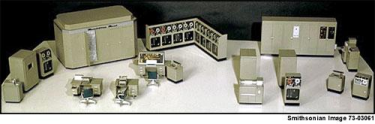
The Internet started in the 1960s as a way for government researchers to share information. Computers in the '60s were large and immobile and in order to make use of information stored in any one computer, one had to either travel to the site of the computer or have magnetic computer tapes sent through the conventional postal system.
Another catalyst in the formation of the Internet was the heating up of the Cold War. The Soviet Union's launch of the Sputnik satellite spurred the U.S. Defense Department to consider ways information could still be disseminated even after a nuclear attack. This eventually led to the formation of the ARPANET (Advanced Research Projects Agency Network), the network that ultimately evolved into what we now know as the Internet.
January 1, 1983 is considered the official birthday of the Internet. Prior to this, the various computer networks did not have a standard way to communicate with each other. A new communications protocol was established called Transfer Control Protocol/Internetwork Protocol (TCP/IP). This allowed different kinds of computers on different networks to "talk" to each other. All networks could now be connected by a universal language.
Breaking the Barrier of DistanceThe internet broke the distance barrier by replacing physical, slow communication with near-instantaneous, low-cost, global digital data transmission. Key ways the internet broke the distance barrier include:

The internet may be built from code, cables, and signals, but its true power lies in people. Every message sent, every post shared, and every conversation started reflects a basic human need: to be heard and to understand others. It has reshaped how we communicate, learn, and build communities, turning a vast world into something more connected and immediate.
At the same time, the internet reminds us that connection is more than just being online. It depends on how we choose to use it: whether we use it to divide or to understand, to argue or to listen. As technology continues to grow and evolve, the responsibility remains ours.
