
How Does Caffeine Work?

How Does Caffeine Work?
Pragna Patlola
Pragna Patlola 25th January, 2026

A lot of people drink coffee, tea, or energy drinks to wake up or stay focused. But caffeine doesn't actually give you energy. Instead, it tricks your brain into feeling less tired. That's why caffeine can help you stay awake, but also why it sometimes causes a crash later.

Caffeine Molecule
What Caffeine Does in Your Brain

Your brain has a chemical called adenosine.

  • Adenosine builds up during the day.
  • The more adenosine you have, the more tired you feel.

Caffeine works by blocking adenosine.
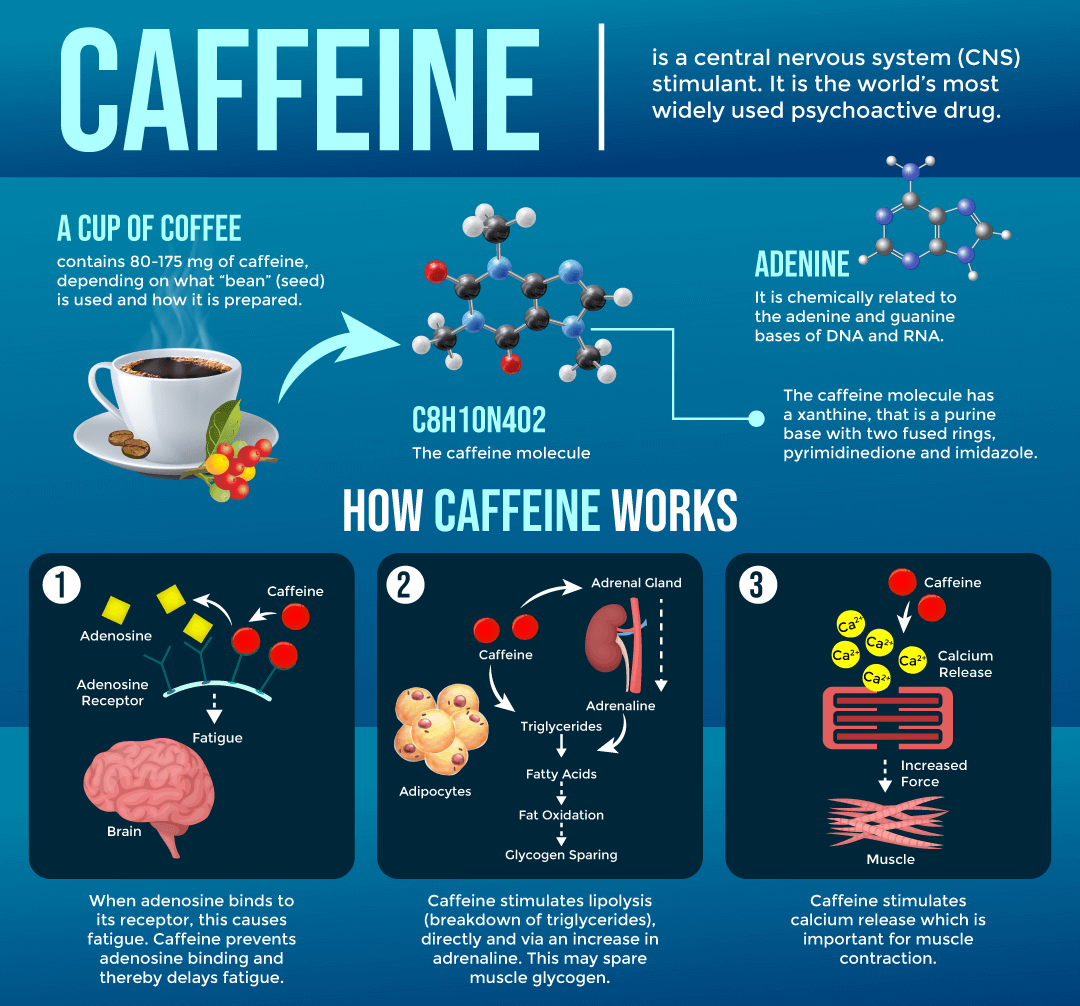
  • When adenosine is blocked, your brain doesn't realize how tired it really is.
  • This makes you feel more awake and alert.
How Caffeine Blocks Adenosine
Why Caffeine Makes You Feel Awake

When caffeine blocks adenosine:

  • Your brain releases more chemicals that make you feel alert.
  • Your heart rate can go up.
  • You may feel more focused or motivated.

This is why people use caffeine for studying late, early mornings, or long school days.

Why You Crash Later

After a few hours:

  • The caffeine wears off.
  • All the adenosine comes back at once.
  • You suddenly feel very tired.

This is called a caffeine crash, and it can make you feel exhausted, moody, and unfocused.

What Happens If You Have Too Much

Too much caffeine can cause:

  • Shaking or jitters
  • Anxiety
  • Headaches
  • Trouble sleeping

This happens because caffeine overstimulates your nervous system.

Fun Facts About Caffeine
  • Caffeine is the most used stimulant in the world.
  • It's found in coffee, tea, soda, chocolate, and energy drinks.
  • Teens are more sensitive to caffeine than adults.
  • Drinking caffeine too late can mess up your sleep, even if you fall asleep easily.
Conclusion

Caffeine helps you feel awake by tricking your brain, not by giving you real energy. It can be helpful in moderation, but too much can make things worse. Knowing how caffeine works can help you use it smarter and make better choices about when and how much to consume.